Economic and Market Review
July 31, 2026
| Equity Indices | Index Level | YTD Return |
| Dow Jones | 53,961.19 | 11.53% |
| S&P500 | 7,695.93 | 12.23% |
| NASDAQ | 26,382.60 | 13.54% |
| S&P Developed Ex-US | 528.11 | 12.53% |
| MSCI–Emerging IMI | 2,586.37 | 17.44% |
| Bonds (Yield) | ||
| 2yr Treasury | 4.21% | 0.71% |
| 10yr Treasury | 4.65% | -1.51% |
| 10yr Municipal | 3.30% | 0.63% |
| US Prime Rate | 6.75% | |
| Commodities | Price | YTD Return |
| Gold | 4,076.42 | -5.22% |
| Silver | 59.34 | -22.72% |
| Crude Oil (WTI) | 76.85 | 33.88% |
| Natural Gas (NYMEX) | 2.67 | -28.08 |
| Currencies | Index Level | YTD Return |
| Dollar Index (DXY) | 99.94 | 1.65% |
Hawkish Fed or a Credibility Problem?
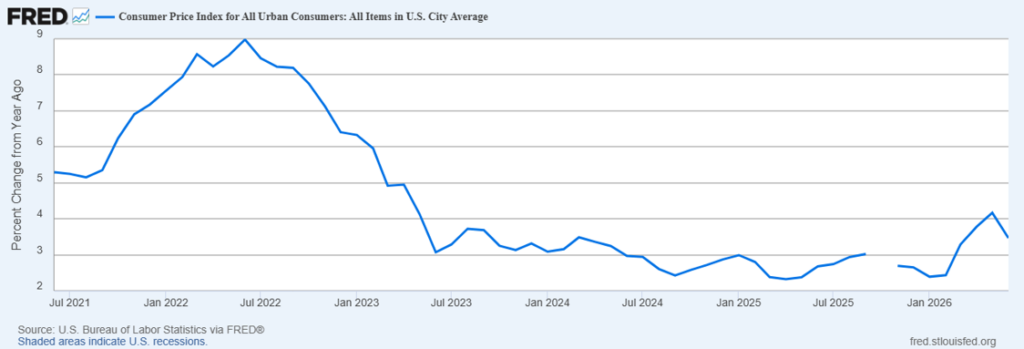
The June CPI report, released July 14, printed the best inflation news of the year. Headline CPI fell 0.4% month over month, the largest one-month decline since April 2020, taking the year-over-year rate to 3.5% from 4.2% in May against a consensus of 3.8%.
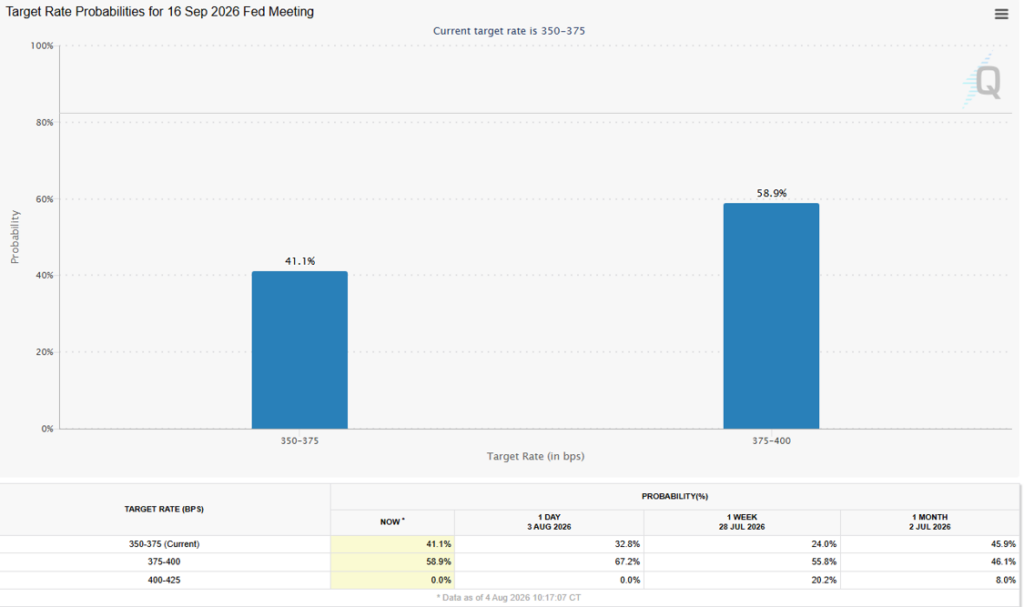
The Fed met July 28-29, Chairman Warsh’s second meeting, and held the funds rate at 3.50-3.75% for the fifth consecutive meeting. The vote was 9-3, and the dissents ran hawkish: Hammack, Kashkari, and Logan wanted a hike. Warsh kept the statement short, declined to offer forward guidance, and told the press conference there is “no soft inflation target.” By the close on July 29, futures priced a 61% probability of a quarter-point hike in September.
The labor data complicates a hike. June payrolls rose 57,000 against expectations of 115,000, April and May were revised down by a combined 74,000, and the unemployment rate fell to 4.2% only because participation dropped to 61.5%, its lowest since March 2021.
The Long Bond Breaks Out
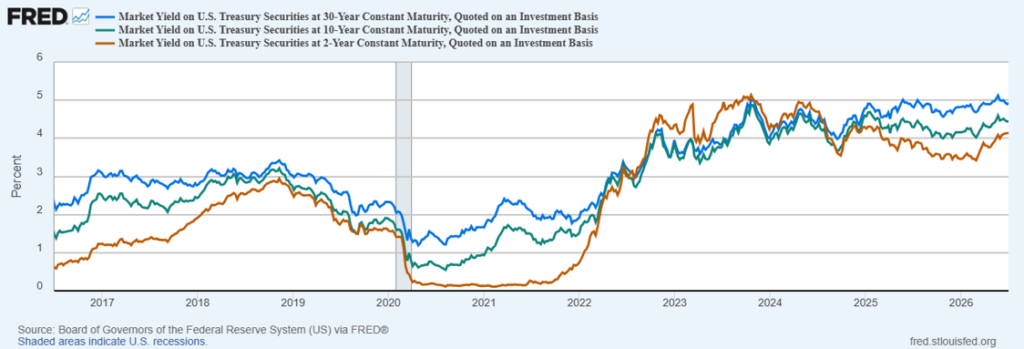
The 30-year Treasury yield reached 5.25% in the final week of July, a level last seen in 2007. After the FOMC decision the 2-year yield fell while the 10-year and 30-year rose, a steepening that says the market is repricing the supply of bonds and the premium for holding them, and taking back a term premium that policy suppressed for a decade. Some coverage framed the selloff as the market losing faith in Warsh. Instead, we believe the long end is charging for deficits above $2 trillion a year and debt approaching $40 trillion, and would keep doing so under any chair.
Washington Intervenes in Japan
The yen fell to 163.65 per dollar on Thursday, July 30, its weakest level in nearly four decades. The war has hit Japan harder than most as it imports nearly all of its oil, much of it through Hormuz, and the Bank of Japan has kept policy loose while the Fed holds at 3.50-3.75%, so the rate gap and the energy bill both push the currency one way. Japanese authorities sold what central bank data suggests was as much as $59 billion on Thursday to buy yen, their second intervention since April. Then Washington joined. On Friday the Treasury notified banks to stand ready, and the New York Fed sold euros to buy yen on the Treasury’s behalf through Goldman Sachs and Morgan Stanley, the first joint yen-buying operation with Tokyo since 1998.
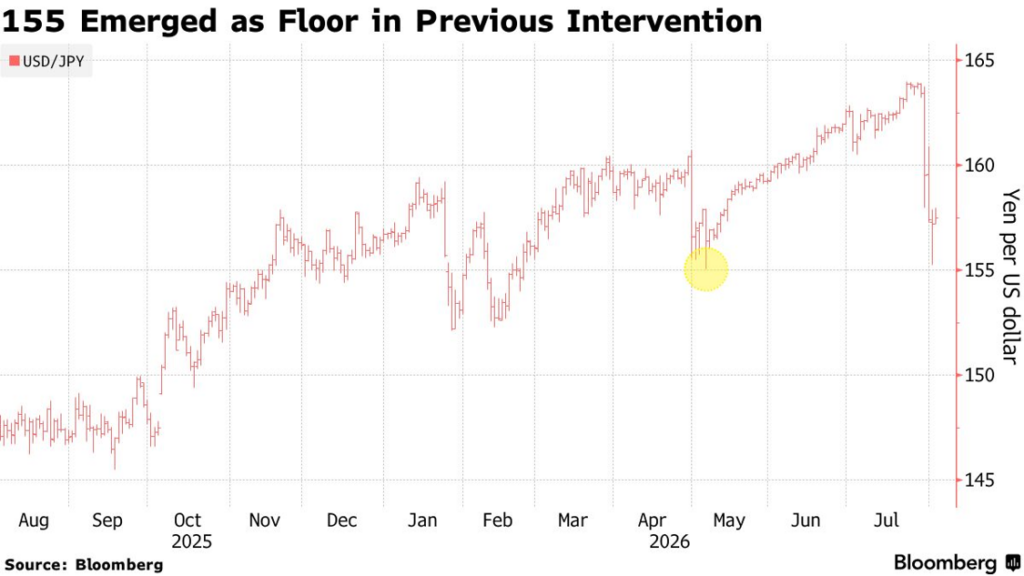
A Reuters photograph of Treasury Secretary Bessent’s notepad at a Camp David cabinet meeting showed the item in his own handwriting: buy Japanese yen, $5-10 billion. The yen closed the week near 157.57, its largest weekly gain since February, and Bessent said Treasury would not hesitate to intervene again. If the intervention fails to push below 155, traders would likely interpret this as a sign that policy options are completely exhausted.
Why does Washington care? The stated reason was friendship and global stability. The mechanical reason, which analysts converged on within a day, is the Treasury market. Japan is the largest foreign holder of Treasuries, and a disorderly yen forces Japanese insurers and pension funds to sell dollar assets, exactly the flow a market already pushing 30-year yields to 2007 levels cannot absorb. This is also the second time in ten months the US has bought another country’s currency, after the $20 billion peso operation for Argentina in October.
A pattern of the world’s reserve-currency issuer spending resources to manage other currencies, while running the deficits described above, has ushered in a new era where currencies are the release valve for fiscal excess, interventions buy time rather than reverse trends.
China Crashes the Memory Party
ChangXin Memory Technologies, CXMT, raised $8.6 billion in Asia’s largest chip IPO of the year and debuted on the STAR Market on July 27 with a 466% first-day gain, ending the session as the most valuable listed company in China at roughly $488 billion. American and Korean memory stocks sold off on the news: SanDisk fell 12%, SK Hynix 8%, Western Digital 7%, and Micron 5%.
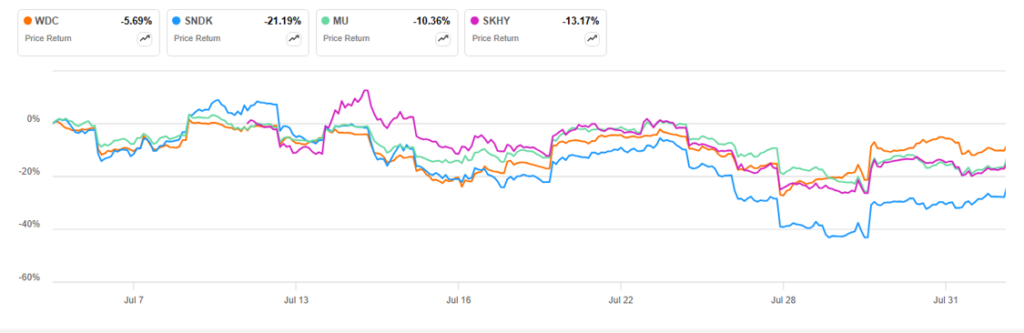
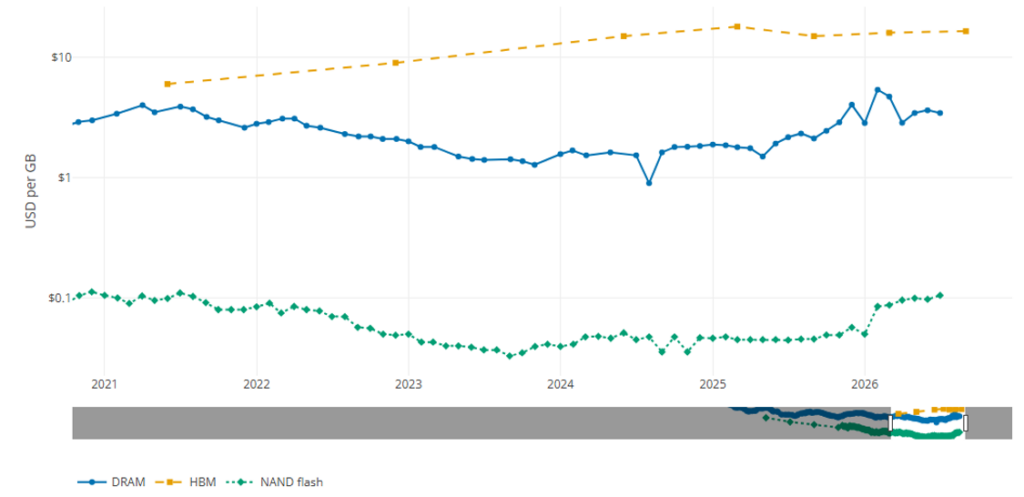
Memory pricing power has been the most extreme in the semiconductor complex this year, with data center DRAM up more than 25% in the third quarter alone and incumbents raising prices at will. SanDisk entered the week up 505% year-to-date and Micron up 223%. CXMT holds about 8% of the global DRAM market, guided first-half revenue up more than sevenfold, and, per press reports, has Apple testing its chips for devices sold in China. US export controls on advanced tooling limit how fast it can add leading-edge supply, so the near-term shortage persists. But a state-funded fourth player with a mandate to build capacity is how memory cycles have ended before.